无间道三
China's factory-built buildings find growing markets overseas_我的网站

A |
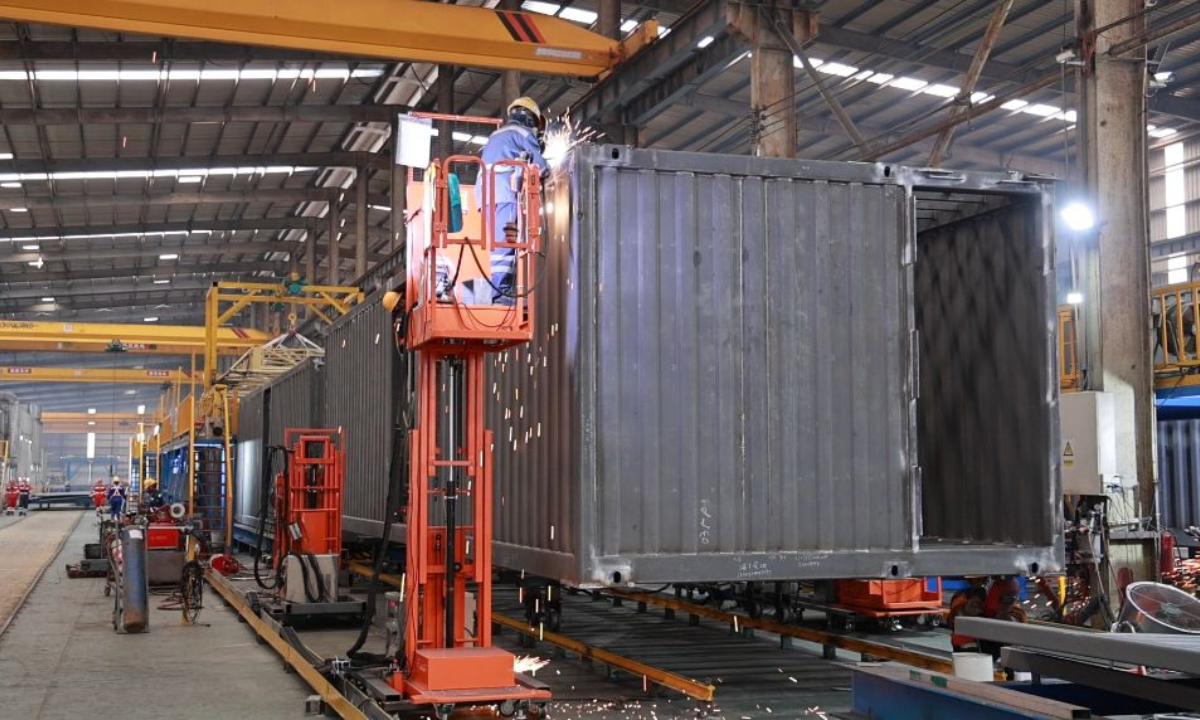
This photo taken on June 9, 2026 shows a workshop of Foshan Meizong Buildings Technology Co., Ltd. in Foshan, south China's Guangdong Province. (Xinhua/Huang Guobao)
A 19-story hotel in Brisbane was not a conventional construction project in Australia, much of it having already been built thousands of kilometers away, inside a factory in south China.
Its room modules arrived with walls, pipes, wiring and interior fittings largely completed, allowing the building to be assembled at a pace of roughly one floor every four to five days.
The project was delivered by Foshan Meizong Buildings Technology Co., Ltd., a firm based in the city of Foshan in Guangdong Province. It reflects a broader shift in the industry, with more work that once had to be done at a construction site now being completed on a factory floor.
Inside Meizong's workshop, automated cutters slice steel tubes to precise dimensions as workers weld structural joints. Assembly teams install wall panels and lay utility lines. In the finished-goods area, dozens of units stand ready for shipment, with kitchens, bathrooms, lighting and sockets already fitted.
More than 90 percent of the work can be completed in the factory, while delivery takes only about one-third of time needed for conventional construction, according to Pang Mingyuan, the company's general manager.
"Building a new home is like building with blocks," Pang said.
Modular housing is gaining acceptance in markets such as Australia and New Zealand, where conventional construction faces high labor costs, lengthy building cycles and weather-related disruptions, while housing remains scarce in some remote areas, Pang adds.
Foshan alone is home to more than 300 exporters of prefabricated buildings. Across the industry, modular structures are being used for hotels, dormitories and offices, while some manufacturers are branching into customized outdoor spaces.
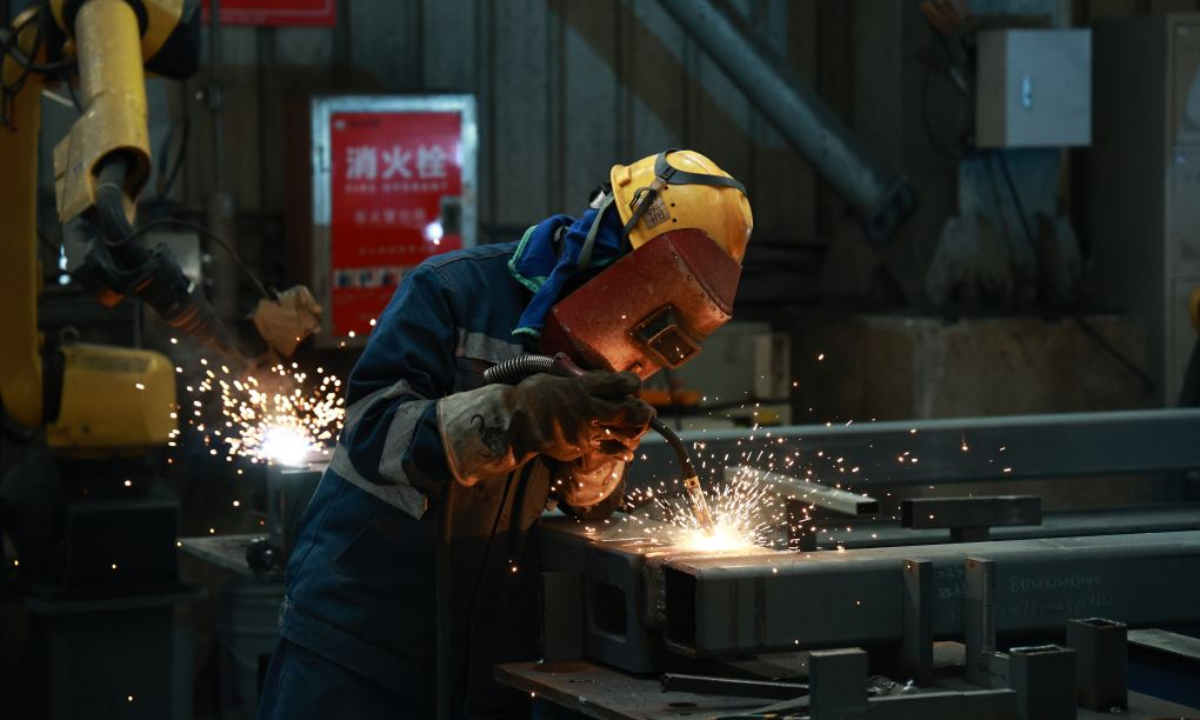
A worker welds structural joints at a workshop of Foshan Meizong Buildings Technology Co., Ltd. in Foshan, south China's Guangdong Province, June 9, 2026. (Xinhua/Huang Guobao)
At SunnyJoy Intelligent Technology Co., Ltd., the glass roof of a modular outdoor room slides open under electric power. Made up of 13 modules, the structure attracted attention at this year's 139th Canton Fair.
"Three adults can assemble it in two and a half hours by following an installation video," said Zhang Yong, the company's general manager.
The company's products sell well in North America and Oceania, while emerging markets in Africa and Southeast Asia are also growing rapidly. Social media has become an important source of overseas customers: SunnyJoy has built a following of around 10 million across domestic and overseas platforms, with online channels generating more than half of its customer inquiries.
Behind such products is the Pearl River Delta's manufacturing network. Zhang said a single outdoor structure can involve dozens of suppliers, with everything from frames and worktops to drive systems and lighting sourced within the region.
That proximity allows manufacturers to adjust designs, upgrade components and respond quickly to changing customer requests. As products become more integrated, companies are also expanding into higher-value offerings that incorporate solar glass, energy storage and intelligent control systems.

This photo taken on June 9, 2026 shows a modular room displayed at SunnyJoy Intelligent Technology Co., Ltd. in Foshan, south China's Guangdong Province. (Xinhua/Huang Guobao)
At a modular factory of China Construction Science & Technology Group Co., Ltd. in the Shenshan Special Cooperation Zone, laser cutting, automated welding and intelligent assembly work in coordination. A digital management system links design, procurement and production, generating material lists and processing drawings from design plans.
Its standardized production system can turn out a wall in 12 minutes and a room module in two hours. The facility has an annual capacity of up to 30,000 units and can produce different types of building modules in parallel according to project needs.
The expansion taking place on factory floors is also showing up in export figures. In the first half of this year, exports of prefabricated structures from seven cities under Guangzhou Customs reached 1.94 billion yuan (285.7 million U.S. dollars), up 21.2 percent year on year, with products reaching more than 190 countries and regions.
One modular-building producer said its export orders have risen nearly 60 percent year on year so far this year, with production scheduled several months ahead.
Manufacturers are also expanding their localized services overseas. SunnyJoy said it is working with third-party warehouses in markets including the United States and Australia to speed up deliveries.
For Chinese producers, the opportunity goes beyond shortening construction time. Their expansion overseas points to a broader shift: buildings are increasingly being designed, produced and exported more like manufactured goods.
。

B |
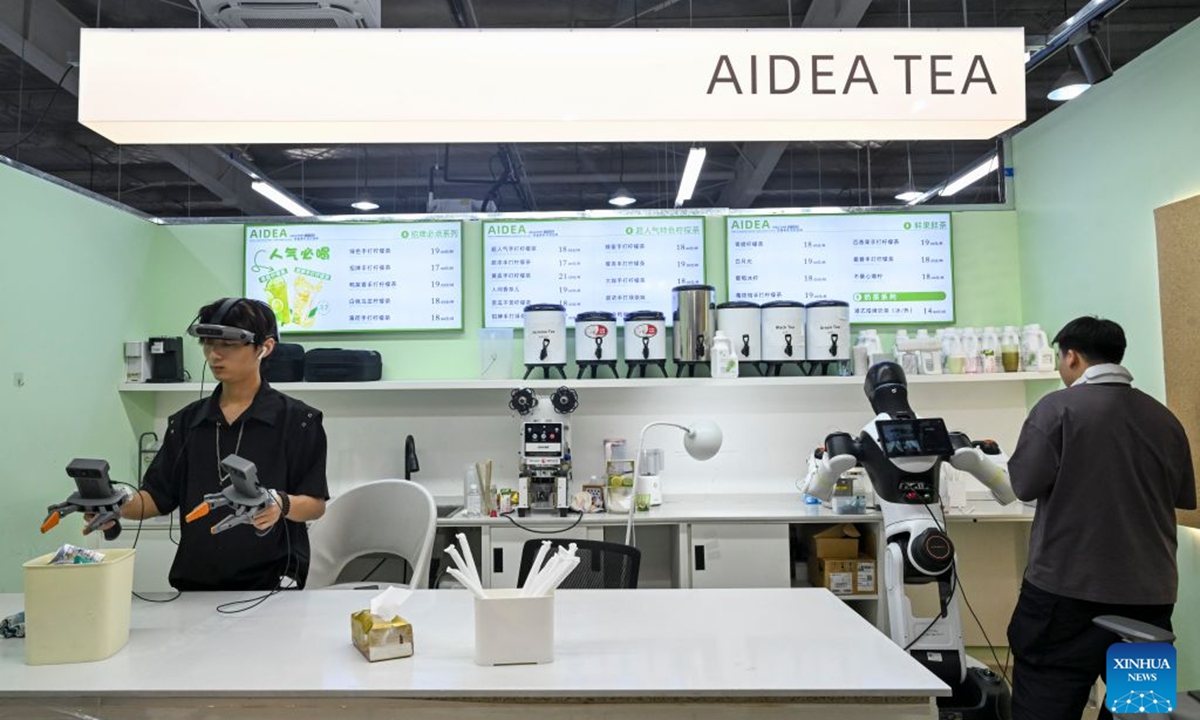
Staff members train a robot to work in a retail scenario at Maniformer, a physical AI data service platform, in Shanghai, east China, Aug. 5, 2026. In Shanghai's tech companies like AGIBOT and Maniformer, embodied intelligence robots are trained in household, retail, sorting, production and other real-world scenarios, to advance their AI capabilities for real-life use. (Xinhua/Chen Haoming)
Nation's value added in the service sector grew 5.2 percent year-on-year, 0.5 percentage points faster than overall economic growth. Retail sales of services rose 5.3 percent year-on-year. In the first half of the year, the service sector expanded steadily, playing an important role in supporting industrial upgrading and meeting people's livelihood needs.
A meeting of the Political Bureau of the Communist Party of China (CPC) Central Committee held on July 30 called for effectively expanding domestic demand and optimizing supply.
From April 7 to 8, a national conference on the service sector was held in Beijing — the first national gathering in the new era devoted to the service sector.
General Secretary Xi Jinping called for advancing producer services toward greater specialization and the higher end of the value chain, fostering high-quality, diverse and accessible consumer services, and building more "China Services" brands, as well as striving to break new ground in the high-quality development of China's service sector.
Beijing convened a municipal service sector conference and pledged to actively shape the "Beijing Services" brand.
Shanghai released its 15th Five-Year Plan (2026-30) for service sector development, aiming to comprehensively enhance the global reach and international competitiveness of "Shanghai Services."
Southwest China's Chongqing Municipality set out to build a modern service industry system and burnish "golden calling cards" of service development such as "Chongqing Trade Global."
Since the national conference, regions and departments have coordinated their planning and accelerated the building of service brands. By 2030, China's service sector is expected to top 100 trillion yuan ($14.6 trillion) in total scale, with higher quality, a better structure and improved standards.
With that target in sight, the Chinese economy is undergoing a fresh "system upgrade."
IBuilding more "China Services" brands is an inevitable choice that follows the laws of economic development and drives economic transformation and upgrading.
China's service sector has steadily expanded in scale and continuously improved in quality and efficiency since the 18th National Congress of the CPC, playing an important role in supporting industrial upgrading, meeting people's livelihood needs and driving job growth, according to Xi.
Scale is the most direct yardstick. In the first half of this year, the service sector accounted for 59.5 percent of GDP, making it the largest sector of the national economy, and contributed 66.1 percent to economic growth, emerging as the main engine of expansion. The figures reflect the sector's weight in high-quality development and in Chinese modernization as a whole.
The Chinese economy sits at a critical window as it shifts from factor-driven to innovation-driven growth, and from investment-led to consumption-led expansion. Projections show that during the 15th Five-Year Plan period, the service sector's contribution to GDP growth will rise steadily, making it the economy's main engine in every sense.
This is also where the key lies in answering people's expectations for a better life and in expanding domestic demand.
The changing Engel coefficient traces the leap in household consumption. At the start of reform and opening-up, the Engel coefficient for Chinese households exceeded 60 percent; in 2025 it stood at just 29.3 percent. The sharp drop in the share of spending on food has freed up vast room for consumption of services such as education, health, culture and tourism.
Global experience shows that once a country's per capita GDP passes $10,000, its consumption structure typically shifts markedly, with services taking a rapidly rising share. China is now in that critical transition. Consumption is moving from "subsistence consumption," geared mainly to basic needs, toward "development-oriented consumption" that seeks quality, experience and self-fulfilment.
From the breakout popularity of the Jiangsu Football City League and the Village Super League to the growing craze for "traveling to catch a show"; from the rapid spread of service points for the elderly and young children to 30-minute delivery of just about anything becoming the norm — service consumption is no longer an optional garnish but a necessity of a better life. With a middle-income group of more than 400 million, China is entering a golden period for expanding the capacity and quality of its service sector.
It is also a key step toward raising total factor productivity and developing new quality productive forces.
Take a garment company. In R&D, AI-assisted design can shorten development cycles. In production, intelligent transformation and digital upgrading can sharply lift efficiency. In distribution, modern logistics can cut overall costs. In sales, market analytics can match products precisely to customer segments.
Globally, as industries divide labor more deeply and integrate faster, leading manufacturers are broadly shifting toward service-oriented manufacturing, drawing on strengths in information, finance, R&D and design to dominate the construction of global value chains. Producer services play an increasingly prominent role in production networks, and largely determine whether product value can extend toward both ends of the "smile curve."
As the world's largest manufacturing nation, China still sees producer services account for less than 35 percent of GDP in value added, leaving gaps in scale, quality and efficiency compared with advanced international levels. Upgrading the service sector is key to moving from a manufacturer of quantity to one of quality.
IIIn building more "China Services" brands, tailoring measures to local conditions and applying targeted policies is the basic methodology.
Underscoring demand-driven development, reform breakthroughs, technology empowerment as well as opening-up and cooperation, Xi called for carrying out capacity-expanding and quality-upgrading initiatives in the service sector.
The service sector spans many categories and takes many forms; its subsectors differ in their levels of development and the challenges they face.
Start with producer services, these must serve enterprises across the full span of production and operations, with the aim of firmly supporting industrial transformation and upgrading by shoring up weak links along the entire chain.
Among these, the deep integration of advanced manufacturing and modern services — the so-called integration of the two sectors — is one of the core propositions of current industrial policy. For a long time, manufacturing and services have operated on parallel tracks, belonging to different policy systems, statistical classifications and regulatory frameworks.
Breaking down this divide requires embedding services into every pore of manufacturing, and the breakthrough lies in data and policy. On one hand, the industrial internet should serve as the link that connects data silos, drawing service firms to develop specialized, manufacturing-oriented services on a data foundation and forming an ecosystem of "data flow — embedded services — value creation." On the other, statistical and policy systems need reform: drawing on international experience, service units inside manufacturers should be able to keep separate accounts and enjoy service-sector policy benefits, giving the integration of the two sectors a clear policy foothold.
Turn to consumer services. At their core, these address people's needs across the full life cycle, with the aim of better meeting aspirations for a better life by raising the development level of key consumer service areas.
Take elderly care and childcare. Demand is moving up from basic provision toward inclusive and even mid- to high-end services, and it is broadening: expectations now span facilities, services, and material and emotional needs alike. Supply-side structural strains are equally acute. In some big cities, beds at high-quality elderly care institutions are nearly impossible to secure, while many beds sit empty at township homes for the elderly. Places at standardized chain childcare centers are hard to come by, even as some small childcare providers struggle to stay in business.
Faced with strains that are multilayered and varied, only precise disaggregation and tiered policies can deliver genuine quality upgrades.
At the baseline, the government should take the lead in improving the three-tier elderly care network across counties, townships and villages, reinforcing the social safety net. At the middle tier, the government should guide the way — using investment, tax and fee incentives, resource guarantees and institutional reform to mobilize more social forces, so that more families can access elderly care and childcare that is affordable, reliable in quality and safe. At the upper tier, industrial policy and a better business environment should support market players in providing personalized and customized services.
IIIBuilding more "China Services" brands means seizing the initiative through the newness of innovation and winning reputation through the substance of quality.
Building more "China Services" brands requires deepening institutional opening-up.
Brands are forged only in open competition. However, barriers in goods trade sit mainly "at the border" — tariffs and customs clearance — while barriers in services trade are more often hidden "behind the border," in market access rules, regulatory systems, qualification recognition and the mutual recognition of professional credentials.
China needs to keep refining the negative list for the service sector and further trim its scope, so that it becomes a genuinely predictable and workable opening-up commitment. It also needs to improve regulatory transparency and consistency, align regulatory rules with prevailing international practice, and reduce hidden barriers. At the same time, cross-border mutual recognition of professional credentials for engineers, physicians and others should be actively advanced, allowing high-end service talent to move freely.
Building more "China Services" brands also means that, as the saying goes, it takes a good blacksmith to forge good iron.
A recent piece of news drew global attention: Mixue Ice Cream & Tea has grown to nearly 60,000 stores worldwide, becoming a food and beverage chain of broad global influence.
Behind Mixue's success lies an intelligent supply chain system. At the front end, it converts consumption data into planting data, guiding farmers to produce to order. In the middle, an intelligent scheduling system coordinates nearly 30 warehouses nationwide, with cold chain coverage reaching more than 97 percent of stores. At the tail end, algorithms provide precise support for choosing store locations. Foreign media have remarked that the chain store's mascot "Snow King" will turn up in your city sooner or later.
Differentiated competition among service brands, in the end, comes down to a contest of innovation capability. For "China Services" brands to truly stand firm, make a name and travel far, they must seize the initiative through the newness of innovation, pushing continuous breakthroughs in service models, technologies and consumption scenarios, and win reputation through the substance of quality.
From selling products to selling services, from "Made in China" to "China Services" — as a 100-trillion-yuan service landscape slowly unfolds, there is reason to believe that these gleaming "China Services" calling cards will converge into powerful momentum for the high-quality development of the Chinese economy.
This was compiled from an article originally published on the front page of the People's Daily on August 13, 2026. 。
Current article:http://30imu.zhouangnaoguangsundianzhenmou.cfd/news/20260826_38072.html
Published on:05:56:11