
灌篮高手
第十一届京台青年创新创业大赛在京落幕_我的网站

A | 中新网北京8月21日电 (金志成)第十一届京台青年创新创业大赛决赛暨颁奖典礼21日在北京举行。
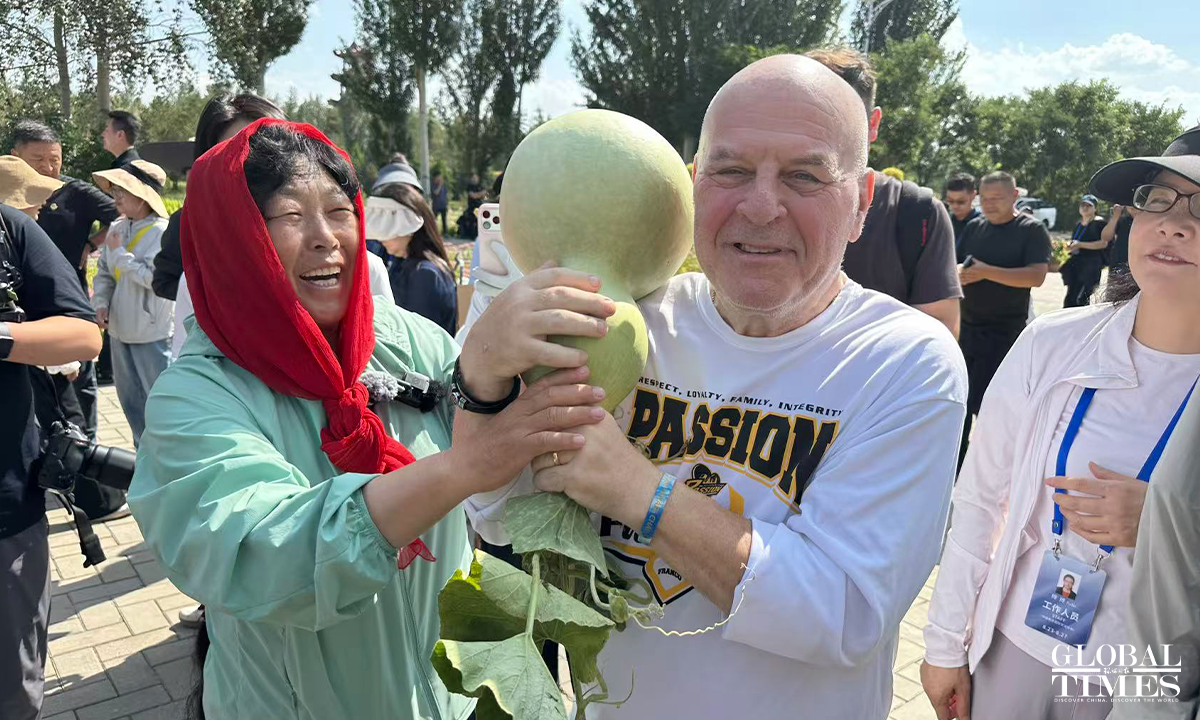
On Monday afternoon, American teacher Ronald Sakolsky visited the homeland of Chinese desert fighter Yin Yuzhen in Uxin Banner of Ordos, Inner Mongolia Autonomous Region. This was a place the American man had visited in 2000 and it has completely changed since then.
In 1999, Sakolsky, a teacher in a China-US education exchange program, was touched by a report on Yin and her husband's afforestation efforts in the harsh wilderness of Mu Us Desert, and raised $5,000 to support her green cause. During that visit, they took pictures - in front of the sunken pit where the Yin couple once resided and in the barren land with a finger-thin sapling they had just planted against a backdrop of dust and bare earth.
What has the $5,000 changed?
On Monday, they came to the Sakolsky forest - a permanent tribute honoring Sakolsky's early contribution to the region's ecological revival - and replicated the vintage pictures, standing in front of a pit that has long been abandoned and beside a newly planted sapling. This time, however, there are bushes and trees in the background.
This contrast not only witnessed their friendship across time and the Pacific Ocean, but also showcased a promise Yin has kept for 27 years and a green dream that has been made possible through generations of joint unwavering efforts from Yin, her husband and countless other sand fighters.
Homecoming with family cooking
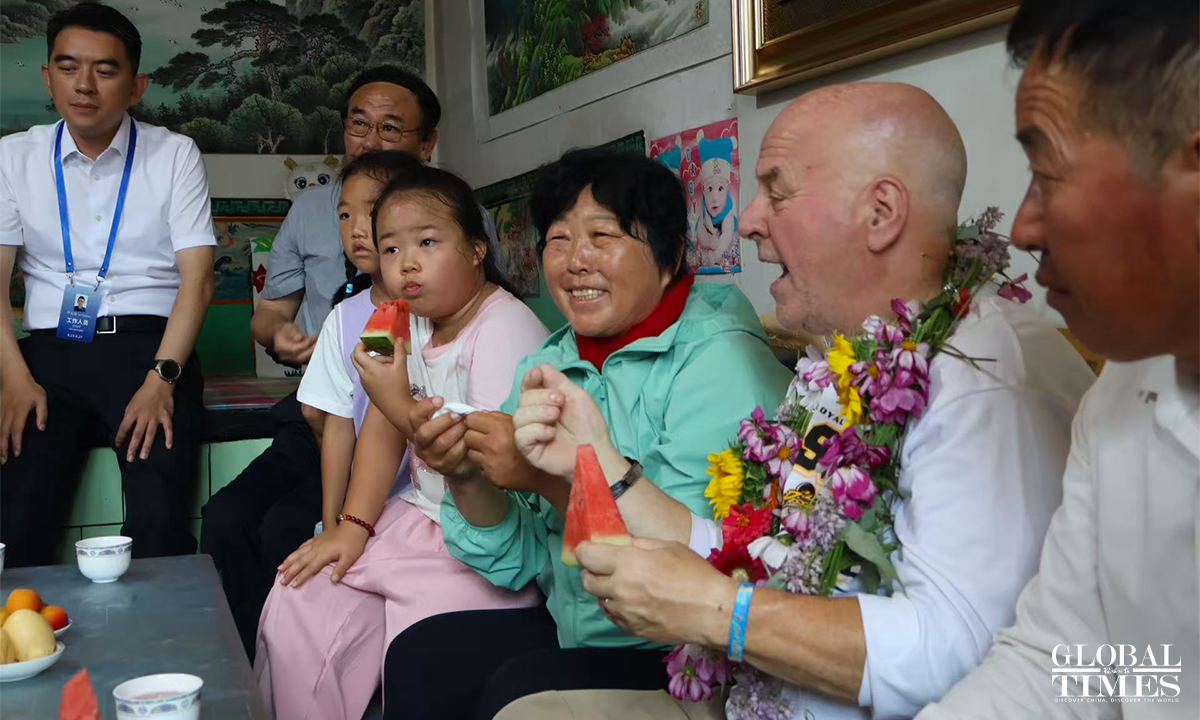
Yin hosted Sakolsky on Monday at her home, filling the air with the aroma of home-cooked meals during their long-awaited reunion. Watermelons were served along with other fresh fruits and vegetables, all harvested locally. Yin told the Global Times earlier that she learned the English word "more" to persuade him to eat more.
In 1999, Yin had few options for showing her hospitality, so she cooked a bowl of plain noodles for Sakolsky. Now, the harsh wasteland has transformed into a vibrant green oasis, thanks to unwavering afforestation efforts.
In the courtyard, the Global Times reporter saw Yin grinning from ear to ear with pride as she introduced the produce from the farmland - green pepper longer than a palm, a bottle gourd even bigger than Yin's head, and bags of foxtail millet packaged with the assistance of Yin's grandchildren, who are proud of the family's generations of commitment to green causes.
During a tour of Yin's home, Sakolsky was impressed by the beautiful house with its green courtyard, saying "You deserve every centimeter of this house." Throughout the visit, he repeatedly praised Yin's hands, which the desert fighter and model worker used to change both the land and her own life through arduous work.
The $5,000 Sakolsky donated in 1999 was equivalent to three years' income for Yin's entire family at the time. Today, that money has grown into more than 50,000 trees.
But Yin's journey did not stop there. Over the following decades, with the support of China's growing ecological restoration policies — including subsidies for afforestation and compensation for forest managers — she transformed the barren land into a productive family forest farm. Her success has inspired many others in the region to take up tree planting and sand control, transforming what was once a desperate struggle into a sustainable livelihood.
From the sandy hollow where the Yin couple lived in in 1985 and the earth hut they resided in until 1993, to the solid brick house Sakolsky saw when he last visited, and the two-story house the big family now lives in, the change in living environment is a clear example of ecological dividends.
Uxin Banner lies in the heartland of the Mu Us Desert. The desertification rate was over 90 percent in the 1950s and forestation coverage was merely 7.2 percent as of 1980. Now, the forestation rate has increased to 33 percent, while plantation coverage has expanded to 85 percent, per official data.
Carry on the greenness, kindness
This miracle would have been impossible without numerous people like Yin, long-term systematic planning and scientific governance.
Chen Ziliang, an expert from the local forestry and grassland bureau, said that Mu Us Desert's sand‑control journey has evolved from collective afforestation to contract desert‑reclamation, moving beyond the simple goal of "keeping trees alive" to restoring vegetation based on water‑resource conditions.
Putting the idea of "lucid waters and lush mountains are invaluable assets" into practice, Uxin Banner no longer views "greenness" and "growth" as an either‑or proposition. On restored sandy lands, the under‑forest economy, eco‑agriculture and eco‑tourism have flourished. Sand‑fixing shrubs are now processed into animal feed and biomass fuel, and local authorities are exploring photovoltaic‑powered desert control, the Global Times learned.
Sand control is no longer just about keeping sand away; it's a development approach that guarantees a greener and better living environment alongside a booming economy and increasing incomes.
On Monday afternoon, when Sakolsky finally stepped into the forest named after him, this American teacher witnessed the Chinese woman's perseverance and commitment to her promises. The $5,000 donated without expectations has grown into a thriving forest of around 50,000 trees.
"A promise is a promise. Ms. Yin fulfilled her promise," Sakolsky said. After 27 years, the wasteland is green, and Sakolsky and Yin are "brother and sister."
"This is the answer to how we guide young people: We must teach them love and perseverance. We need to show young people photos of Ms. Yin planting trees, digging the soil with her bare hands," Sakolsky remarked while packing a jar of sand. He said he planned to bring it back to the US, telling his grandchildren it is not just a jar of sand, but "a jar of love."
Sakolsky told the Global Times earlier that the younger generation only knows about the dust-covered landscape from photos and stories of the elderly. It is important to tell them how the greenness is achieved, and how every single person can contribute to making an extensive forest in the harshest environment.
"I see where China and America can work together. I see it, so I will not quit. She [Yin] never quit. 'Quit' is not in her vocabulary," Sakolsky said with emotion on Monday.
"Chinese and Americans can be family. We can get over the differences if we focus on the similarities... If we focus on our similarities and not our differences, we can solve the problems."
At the end of Monday's schedule, Yin and Sakolsky planted another sapling together, just as they did about three decades ago, but in a completely different landscape.
This new sapling carries on the story of not only greenness through generations of joint efforts, but also kindness across the Pacific Ocean.
。两岸青年创业团队、专家学者、投资机构及产业界代表齐聚,围绕创新项目展示、产业合作、资源对接等展开交流。 经前期选拔进入决赛的20支青年创业团队,当天按“赛道”分组路演,阐述各自项目的创新点和核心优势,在6分钟项目展示和4分钟回答评委提问中展开角逐。 8月21日,第十一届京台青年创新创业大赛决赛在北京举行。金志成 摄 北京台资企业协会常务副会长周至元在致辞中表示,京台青年创新创业大赛已迈入第十一个年头,多年来,一批批团队从赛场出发,结识伙伴、链接资源,将创业构想逐步变为现实。他鼓励参赛者,不只为比赛而来,更借此机会多走走、多看看,在北京结交朋友。 决赛现场,两岸婚姻家庭夫妇高睿旸与马荞茵的项目路演引人关注。他们创办的福建七善德斋生物科技有限公司,攻克了酵种易酸化、稳定度差、难以量产的难题,已取得专利并实现稳定量产。 在高睿旸看来,电商与新媒体平台拓宽了产品推广渠道,发达的物流体系和专项启动资金、税率减免等惠台政策,降低了创业初期的物质成本。

B | 大陆的产业链配套优势突出,市场空间广阔。

C | 上届大赛冠军获得者连唯证对此深有感触。他说,两年来,多次到北京,越来越深刻地感受到这是一座充满机会、充满活力,也充满希望的城市。他寄语在场创业青年,不要只停留在舒适圈,要勇敢走出来,了解北京、了解大陆市场。 8月21日,第十一届京台青年创新创业大赛颁奖典礼在北京举行。金志成 摄 经评审,大赛最终评出一等奖1名、二等奖2名、三等奖3名、优秀奖14名。其中,“极寒破壁者:基于超低温固态电池技术的能源解决方案”项目夺得一等奖。 据悉,京台青年创新创业大赛自2016年创办至今,已从赛事评选延伸为涵盖创业培训、产业对接、参访交流与落地服务的综合平台,链接两岸高校、孵化器、投资机构等多元资源。截至目前,大赛累计吸引5800余个项目报名,覆盖台湾148所高校,45个项目获融资逾4.2亿元,超62个项目已在大陆落地发展。(完) 【编辑:王琴】。
Current article:http://30imu.zhouangnaoguangsundianzhenmou.cfd/9kp/rlbt.html
Published on:21:53:42


灌篮高手TXT下载声明:
1 我的网站免费提供的灌篮高手,均由网友上传,供下载测试之用,不作商业用途,下载后请二十四小时后删除!
2 我们根据txt小说全文所整理出灌篮高手txt电子书全集免费下载,由程序自动生成灌篮高手txt下载文件。
3 书友所发表的txt小说灌篮高手的相关评论,并不代表本站赞同灌篮高手txt下载或者支持灌篮高手的读者观点。
4 如果发现小说《灌篮高手txt全集》无法下载未及时更新请联系我们。如果您喜欢灌篮高手txt电子书,请支持作者到书店购买正版图书。感谢您的合作与支持。
5 好看的小说灌篮高手是作者"百年不渡"的最新力作,灌篮高手电子书由网友发布;小说灌篮高手版权属于作者所有,如果侵犯您的利益,请通知我们。