图片说明:17日,俄罗斯总统普京在哈尔滨出席第八届中俄博览会开幕式,并在中国国家副主席韩正的陪同下进行参观。

B |
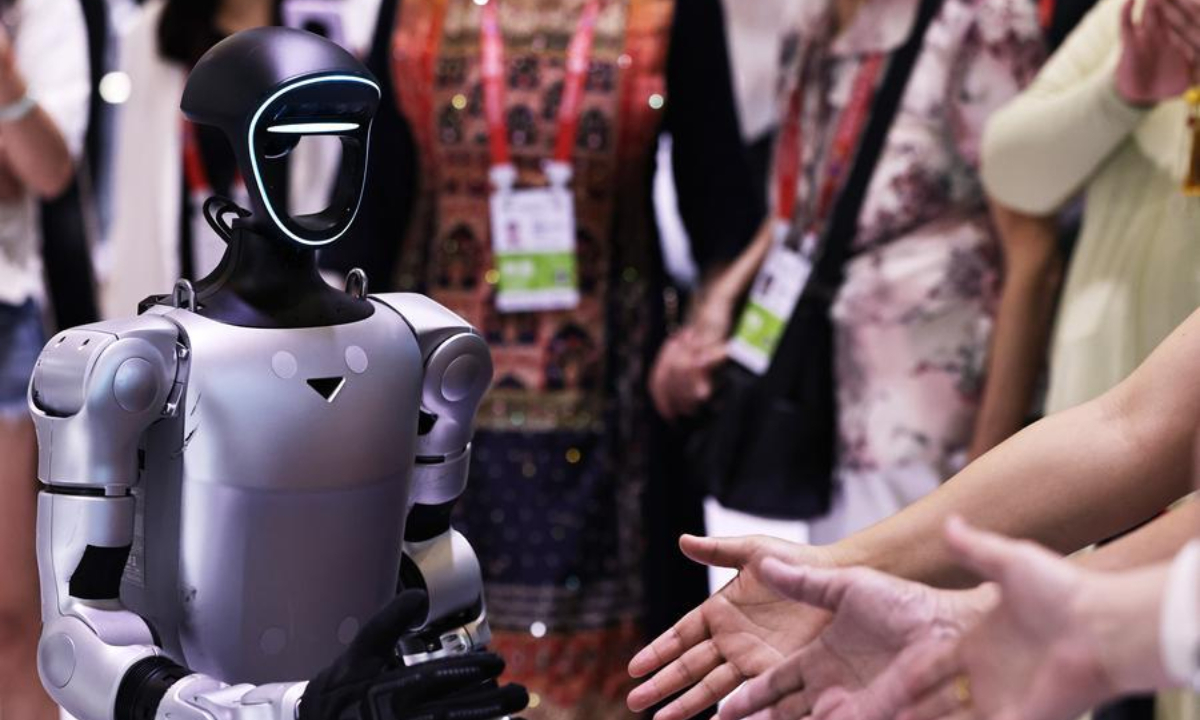
Visitors interact with a robot from Unitree Robotics during the sixth China International Consumer Products Expo (CICPE) in Haikou, south China's Hainan Province, April 14, 2026. (Xinhua/Gao Jing)Foreign financial institutions are finding a stronger investment case in China's hard-tech industries as breakthroughs in AI, semiconductors, and advanced manufacturing are driving more exports, higher earnings, and growing interest from global investors.
China's high-tech exports surged over 50 percent year on year in July, well ahead of the 17.8-percent growth in total exports, customs data showed. The export gains are being mirrored in investment flows, with foreign funds moving into Chinese technology stocks and global indices adding newly listed hard-tech companies.
Rob Subbaraman, head of global macro research and co-head of global markets research at Nomura, said China's low-cost and abundant electricity supply, growing talent pool and early lead in physical AI are driving the rapid development of its AI industry chain.
China's development of open-weight models could accelerate their adoption by businesses, allowing productivity gains from AI as a general-purpose technology to spread more quickly across the economy, he said, citing models from Chinese firms including DeepSeek and Moonshot AI.
"The lower cost of these models was another advantage," he said, adding that the benefits could extend beyond China, particularly to emerging markets that could adopt cheaper Chinese AI models.
China's strength in advanced manufacturing has also become increasingly evident, said Robin Xing, chief China economist at Morgan Stanley, pointing to China's roughly half share of global installed new energy storage capacity and the rapid growth in outbound licensing deals for innovative drugs. These trends, he said, underpin the long-term investment case for China's hard-tech sector and leading manufacturers.
These strengths are increasingly being reflected in foreign investors' allocation decisions. This year, Goldman Sachs has twice raised its 12-month target for the CSI 300 on improving earnings momentum, and retained an overweight view on Chinese equities.
Kinger Lau, chief China equity strategist for Goldman Sachs Research, said the bank's positive view reflected improving earnings momentum, favorable macroeconomic and liquidity conditions. A-share equities offered international investors diversification benefits that remained underappreciated, along with attractive exposure to hard-tech and AI themes, he added.
Individual companies are drawing overseas interest too.
ChangXin Memory Technologies surged 465.82 percent on its debut on Shanghai's STAR Market last month, reaching a market capitalization of more than 3.2 trillion yuan (about 471.28 billion U.S. dollars).
U.S.-based Tema ETFs made the chipmaker a top holding at a 10.56 percent weight on its debut day, while MSCI officially added it to its China All Shares Index on Monday under a fast-track rule for large IPOs.
Robotics is where the enthusiasm is most visible. Unitree, set to become China's first mainland-listed humanoid robot maker, priced its Shanghai IPO at 150.8 yuan a share, representing 10 percent of its post-offering share capital. The offering is expected to raise about 6.1 billion yuan in gross proceeds.
That optimism, however, exists alongside broader economic pressures. Nathan Chow, senior economist at DBS Bank, said the imbalance between relatively strong supply and weak demand remained pronounced, with household consumption and some companies' profitability still under pressure.
Investment in infrastructure could help offset the weakness in private investment in the near term, while lowering logistics and energy costs and improving the efficiency of resource allocation over the longer term, Chow said. It could also strengthen supply chains and reduce the economy's exposure to external shocks and geopolitical risks, he added.
The implementation of policy measures would be key to sustaining the recovery in the second half of this year, analysts noted.
Economic management requires both easing the brakes and stepping on the accelerator, said Song Yu, chief China economist at UBS Securities, adding that faster fiscal spending and the use of bond proceeds, additional policy support and better coordination between fiscal and financial policies are needed, alongside measures to remove barriers to household consumption and improve the business environment.
"With stronger policy support and measures taking effect, China's economy is expected to maintain a steady recovery in the second half of the year," Chow said.
。(俄罗斯卫星通讯社)
17日凌晨,正在中国进行国事访问的俄罗斯总统普京抵达哈尔滨,继续访华之旅。当天,中国国家副主席韩正在哈尔滨同普京共同出席第八届中俄博览会开幕式,宣读习近平主席贺信并致辞。普京会见韩正时表示,我同习近平主席进行了内容充实、富有成效的会晤,为两国关系发展作出长远规划,访问取得圆满成功。双方要密切协调配合,加强各领域务实合作,进一步推进远东—东北地方合作,推动两国关系实现更好发展。俄REN TV电视台网站17日报道称,普京此次专程前往哈尔滨,参加第八届中俄博览会和第四届中俄区域合作论坛开幕式,体现了俄方对两国地方合作的重视。黑龙江省是中国对俄经贸合作的重要省份之一,该省不仅同俄接壤,还留有宝贵的历史文化记忆,双方各领域合作成果丰硕。俄卫星通讯社17日称,普京此次访华的主要成果体现了俄中两国在地区和国际事务中的战略协调和合作,并向外界传递了两国坚定维护多边主义和国际秩序的决心。
据俄媒报道,普京当天还向苏联红军烈士纪念碑献花,并参观哈尔滨工业大学。俄塔社称,普京在与哈工大师生交流时表示,在日程允许的情况下,自己喜欢读书。“我床头有一些书,一旦我有时间,特别是在睡前,我就试着打开和阅读这些书。”此外,普京被问及最喜欢吃哪些中国菜时表示,世界上伟大的美食并不多,但中餐是其中之一。他提到自己前一天出席招待宴会时品尝了北京烤鸭,“说实话,我原本只想吃一块。但我没忍住,吃了第二块,太好吃了!”
俄总统新闻秘书佩斯科夫17日对俄《消息报》表示,中俄博览会为两国拓展更多领域合作、实现更大互利共赢提供了重要平台。地方合作是俄中经贸合作的重要组成部分,双方在该层面合作内容非常丰富,具有广阔前景。
今年是中俄建交75周年。中俄政治互信持续深化,经贸合作结出累累硕果。据俄卫星通讯社17日报道,普京在第八届中俄博览会开幕式致辞时表示,俄罗斯支持中方在俄境内进行本地化生产,并愿意为投资者提供优惠、帮助和支持。普京还强调两国间运输物流通道的蓬勃发展,并承诺将继续缩短俄中边境货物和车辆的检查时间。此外,俄地方政府深入研究、细化了相关领域的倡议。例如,卡卢加州打算同中国在汽车领域开展合作。据俄塔社17日报道,此次访华期间,俄代表团成员之一的俄经济发展部长列舍特尼科夫表示,俄中各领域合作正在稳步拓展,每年都有新的合作项目补充投资组合。目前,双方在运输、物流、汽车工业、农业、天然气化工和采矿等领域有80多个大型项目正在进行,总投资约2000亿美元。
按照计划,普京17日结束对中国的国事访问。当天,外交部欧亚司司长刘彬介绍普京总统对华进行国事访问情况时表示,此访期间,习近平主席同普京总统举行了坦诚友好、内容丰富的会晤,从历史和现实视角全面总结双边关系发展成功经验,在新的历史起点上为未来一个时期中俄关系发展擘画了蓝图,为两国战略协作和各领域合作作出顶层设计和战略部署。两国元首共同签署并发表《中华人民共和国和俄罗斯联邦在两国建交75周年之际关于深化新时代全面战略协作伙伴关系的联合声明》,见证了双方10多份重要合作文件的签署。普京总统还赴哈尔滨出席第八届中俄博览会,为双方经贸合作发展注入了新的动力。习近平主席同普京总统还共同出席“中俄文化年”开幕式暨庆祝中俄建交75周年专场音乐会。年内双方还将举办一系列丰富多彩的文化交流项目。相信中俄文化年的举办将进一步激发两国文化合作潜力,共同开辟两国人民相知相亲的新愿景。